

iriju
See commitment readiness before you widen the next decision
iriju turns program, project, or product facts into one decision brief: whether to clear, proceed with controls, or pause further commitment—what is driving it, and what to do next.
How it works
From program facts to one decision brief
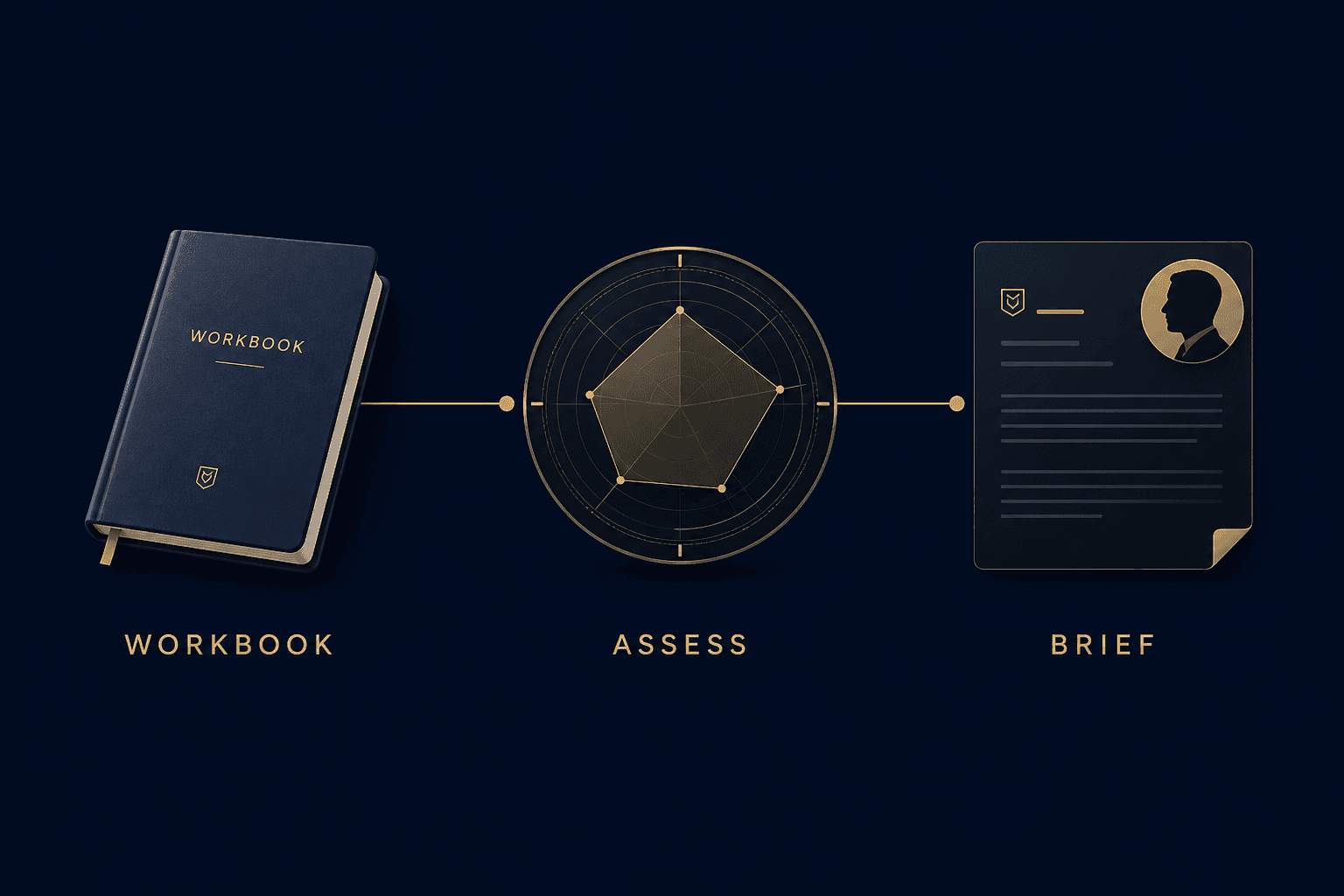
Invite-only. Two signed-in paths. One brief for leadership after server assessment—including new and early records, not only in-flight programs.
- 01
Bring your program facts
Upload a completed Bacenik Ipinnu (SEP Decision Intelligence Assembly) workbook (.xlsx), or complete structured intake across seven program sections. That works for a new program, project, or product as well as an in-flight one. Existing DFMEA and PFMEA are source material when you have them—not a second product, and not a prerequisite.
- 02
Assessment runs on the server
iriju computes commitment posture plus commitment-stability, readiness, and schedule signals, and surfaces ranked drivers and risks from the assessed record.
- 03
Open one decision brief
The dashboard shows posture, metric signals, top drivers, watch items, next best action, and a why-this-posture evidence trail.
New programs, projects, and products
Early risk evaluation before you commit outward
iriju assesses a new program, project, or product the same way it assesses an in-flight one: from a Bacenik Ipinnu workbook or structured intake. You do not need a completed native DFMEA or PFMEA file to start. Intake defaults to a Pre-commitment phase. A public preliminary read qualifies the conversation; a governed brief — posture, ranked risks, and next actions before you widen commitment to customers and stakeholders — still requires Bacenik access.
If you already keep DFMEA and PFMEA, Bacenik can map those files into Ipinnu. If you do not, start with intake or a first Ipinnu workbook, then run iriju.
Start a preliminary read
Start from facts you already know
Structured intake collects overview, technology maturity, validation evidence, manufacturing, schedule, cost, and major technical risks. Limited or emerging evidence is a valid input—the assessment constrains posture when evidence is weak.
Clarity before customer and stakeholder commitment
The brief is for your leadership team. It does not speak to customers for you, and it is not a substitute for board or contractual authority. It returns whether to clear, proceed with controls, or pause—so you can decide what is ready to promise.
Existing DFMEA and PFMEA
Use the DFMEA and PFMEA you already keep
iriju does not ask you to start a new failure-mode process. Existing design FMEA (DFMEA) and process FMEA (PFMEA) stay your engineering record. Bacenik Ipinnu is the governed workbook that receives those facts as FMEA-ready rows. iriju then assesses that assembly and returns one decision brief.
iriju assesses a completed Ipinnu workbook (.xlsx) or structured intake. It does not import native DFMEA/PFMEA tool files by itself. Bacenik consulting can help map your existing FMEA files into Ipinnu when you want that assembly guided.

Design FMEA (DFMEA)
Design failure modes, effects, causes, and current controls from your DFMEA are assembled into the Ipinnu FMEA risk register—severity, occurrence, detection, required validation, and residual exposure included.
Process FMEA (PFMEA)
Process and manufacturing failure modes enter the same Ipinnu register so production exposure is assessed with the design record, not left in a side spreadsheet.
What you get
A labeled look at the decision brief
Same customer-facing layout as the signed-in brief. Figures below are illustrative—live assessment requires Bacenik access.

Why executives talk to Bacenik
Whether your next commitment decision is soon or later
iriju access is invite-only (Bacenik-managed). First conversations are usually about one program decision—not an open product tour.
Decision coming in the next 30–90 days
Bacenik consulting can help assemble a first Ipinnu workbook or structured intake—including a new program, project, or product still in Pre-commitment—run iriju, and review the resulting brief with your leadership.
No near-term decision yet
Ask for a method briefing on how a Bacenik workbook or structured intake becomes the iriju decision brief—before the next commitment scramble.
What this is for
Turning assembled program facts into one governed brief after server assessment—not a status dashboard, chat bot, or open self-serve trial.
Fit check
Who this is for
Good fit
- Program, project, or product leaders accountable for a commitment or readiness decision—including early risk evaluation before customer or stakeholder commitment
- Teams that can provide program facts via Bacenik workbook or structured intake
- Organizations that want Bacenik to guide the first engagement under invite-only access
Not a fit (yet)
- Teams seeking open self-serve signup, free trials, or generic chat tools with no program record
- Programs that will not share program facts needed for a governed brief
Invite-only consulting
Talk to Bacenik about your next commitment decision
Write if you have a near-term commitment decision—including a new program, project, or product before you commit to customers and stakeholders—or if you want a method briefing first. iriju is invite-only. There is no self-serve trial of the decision brief. A public preliminary read is available to qualify the conversation.
Talk to BacenikOr write consulting@bacenik.com directly.